


Peixe - Filetes
Tamboril com Vegetais à Oriental || Oriental Monkfish with Vegetables
segunda-feira, março 11, 2013
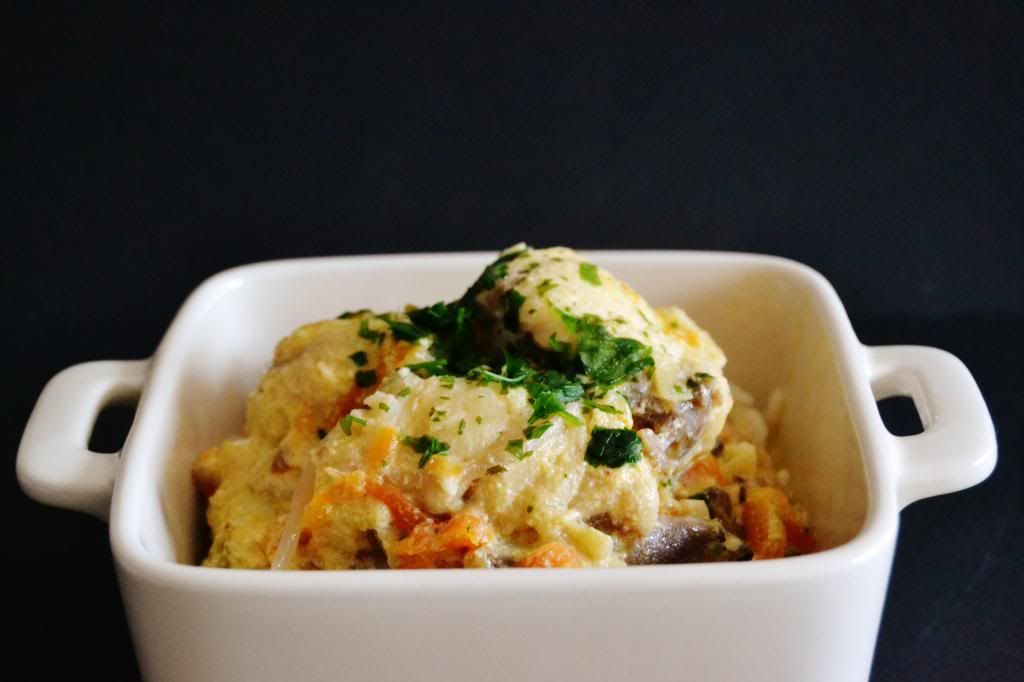
Acompanhando um sabor muito especial, o tamboril junta-se aos vegetais nesta dança pelo leite de côco e das especiarias!
Following a very special taste, monkfish joins the vegetables in this dance by coconut milk and spices!
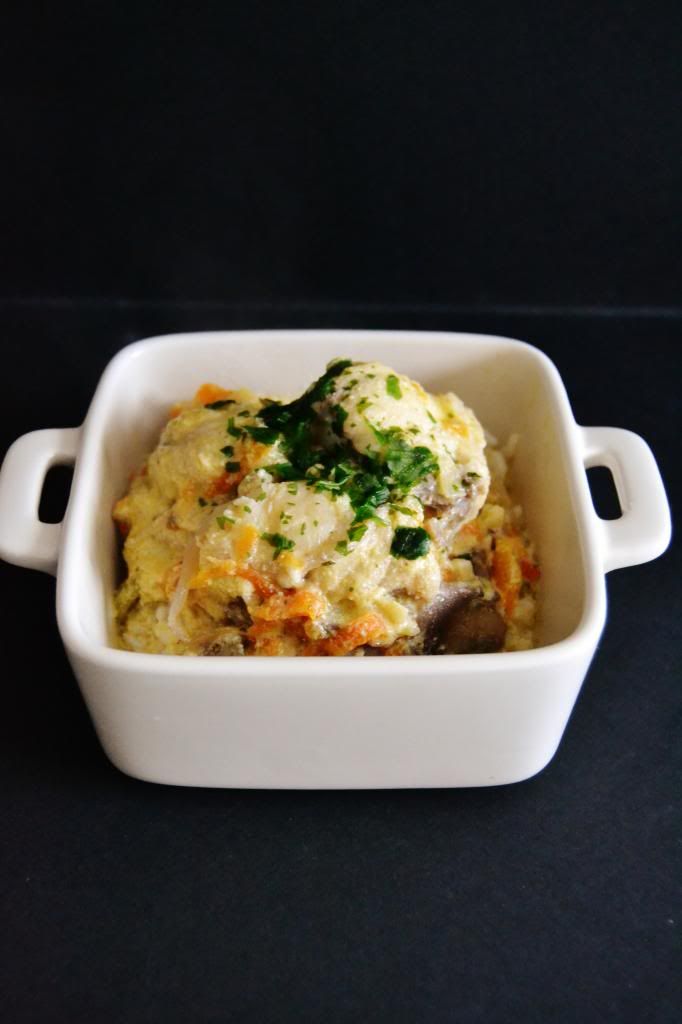
800g monkfish in cubes, 2 leeks, 4 carrots, 300g white mushrooms, 150g soy sprouts, 5 cloves, olive oil, 200ml cream, 400ml coconut milk, 2 tspoons spice mixture Segredos do Mundo Oriental, salt
Preparação:
Comece por preparar os vegetais: corte o alho-francês em rodelas, rale as cenouras e lamine os cogumelos. Pique os dentes de alho e aqueça-os em azeite. Junte os vegetais e deixe estufar até estarem cozinhados.
Junte as natas, o leite de coco e a mistura de especiarias. Envolva e junte o peixe. Tempere com sal.
Tape o tacho e deixe cozinhar.
Sirva com arroz.
Method:
Start by preparing the vegetables: Cut the leek into slices, grate the carrots and lamine mushrooms. Chop the garlic and heat them in olive oil. Add the vegetables and let stew until they're cooked.
Add the cream, coconut milk and spice mixture. Get involved and join the fish. Season with salt.
Cover the pot and cook.
Serve with rice.
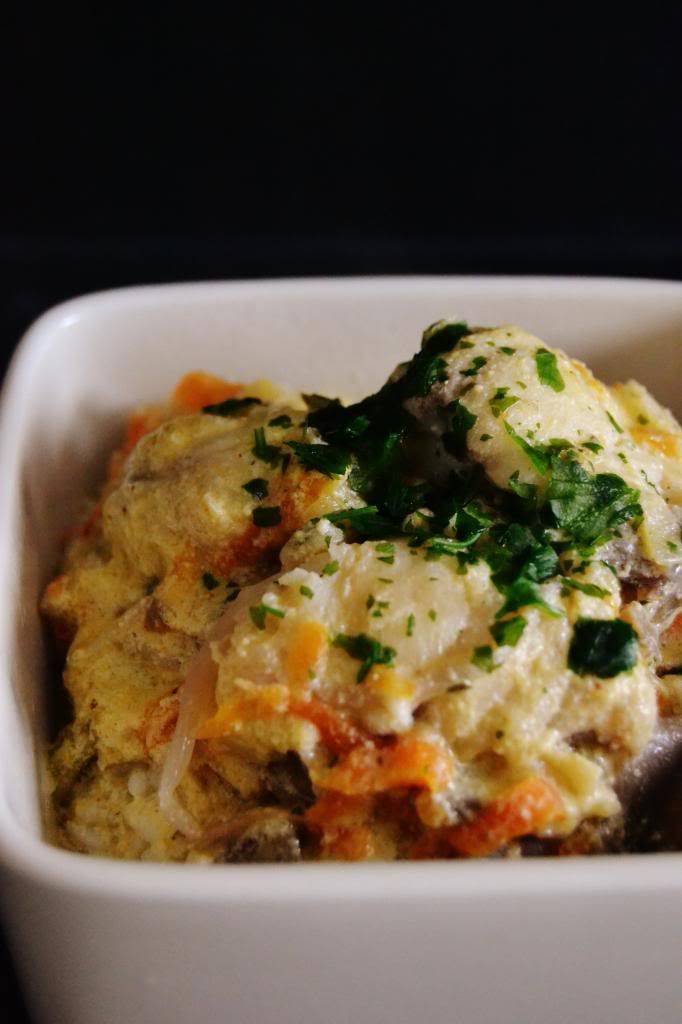
Following a very special taste, monkfish joins the vegetables in this dance by coconut milk and spices!
Ingredientes:
- 800g de tamboril em cubos
- 2 alhos-franceses
- 4 cenouras
- 300g de cogumelos brancos
- 150g de rebentos de soja
- 5 dentes de alho
- Azeite q.b.
- 200ml de natas
- 400ml de leite de coco
- 2 colheres (chá) de mistura de especiarias Segredos do Mundo Oriental da Margão
- Sal q.b.
800g monkfish in cubes, 2 leeks, 4 carrots, 300g white mushrooms, 150g soy sprouts, 5 cloves, olive oil, 200ml cream, 400ml coconut milk, 2 tspoons spice mixture Segredos do Mundo Oriental, salt
Preparação:
Comece por preparar os vegetais: corte o alho-francês em rodelas, rale as cenouras e lamine os cogumelos. Pique os dentes de alho e aqueça-os em azeite. Junte os vegetais e deixe estufar até estarem cozinhados.
Junte as natas, o leite de coco e a mistura de especiarias. Envolva e junte o peixe. Tempere com sal.
Tape o tacho e deixe cozinhar.
Sirva com arroz.
Method:
Start by preparing the vegetables: Cut the leek into slices, grate the carrots and lamine mushrooms. Chop the garlic and heat them in olive oil. Add the vegetables and let stew until they're cooked.
Add the cream, coconut milk and spice mixture. Get involved and join the fish. Season with salt.
Cover the pot and cook.
Serve with rice.
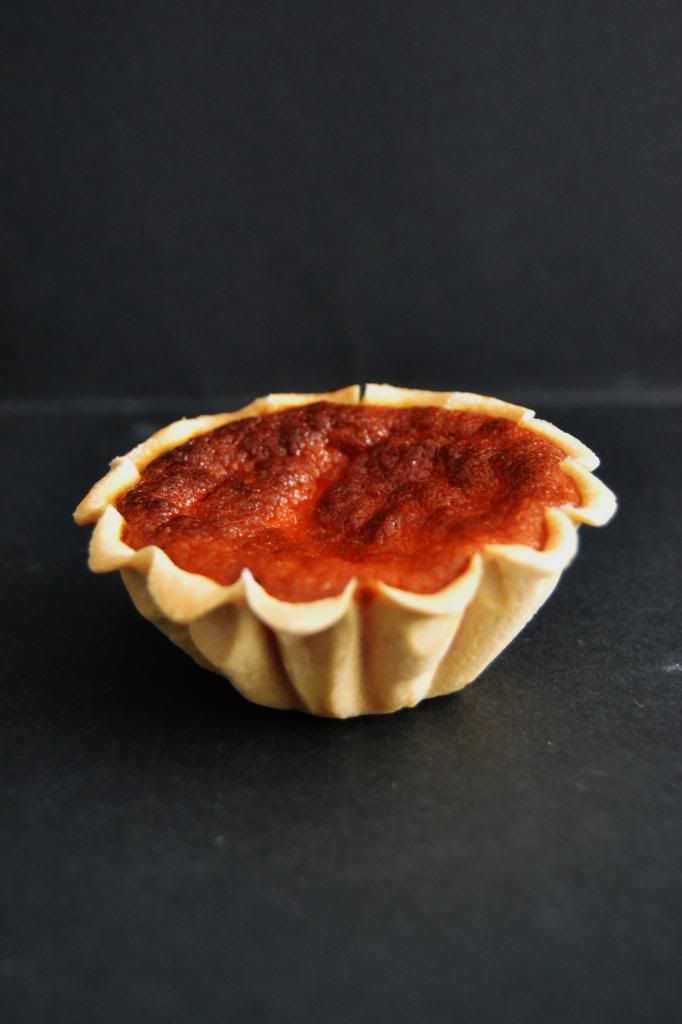
A queijada designa em Portugal um pequeno bolo enformado confeccionado com queijo ou requeijão, ovos, leite e açúcar. Por extensão, dá-se este nome a bolos do mesmo formato, mas com recheio diverso (amêndoa, laranja, ovos).
Queijada, in Portugal, means a small shaped cake made with cheese or cream cheese, eggs, milk and sugar. By extension, this name is given to cakes of the same size but with different filling (almond, orange, eggs).
Ingredientes:
(12 unidades)
(massa de óleo)
(oil dough): 125g all-purpose flour, 12g vegetable oil, 1g salt, 62g water.
(filling): 500g boiled carrots in purée, 30g margarine, 200g white sugar, 2 eggs, 3 tbspoons cornstarch

Preparação:
Comece por preparar a massa. Junte a farinha ao sal e adicione o óleo e a água aos poucos. Amasse muito bem e estenda a massa o mais fina possível (cerca de 2mm de espessura)
Enrole a massa no rolo, posicione as formas todas juntas e coloque a massa por cima das mesmas. Com a ajuda de uma pequena bola de massa enfarinhada, calque a massa nas formas. Corte o excedente e reserve.
Prepare o recheio, misturando a cenoura em puré com o açúcar e a margarina. Junte as gemas e o amido de milho. Por fim, bata as claras em castelo e envolva.
Recheie as formas até ao topo e leve ao forno a 200ºC por 15 minutos e a 180ºC nos 40 minutos seguintes.
Method:
Start by preparing the dough. Add the flour and salt to the oil and water gradually. Knead well and stretch the dough as thin as possible (about 2mm thick).
Roll dough to roll, place all the molds together and place the dough on top of them. With the help of a small ball of dough floured, press dough in molds. Cut off the excess and set aside.
Prepare the filling by mixing the carrot purée with sugar and margarine. Add the egg yolks and cornstarch. Finally, beat the egg whites and mix up.
Fill the molds to the top and bake at 200ºC for 15 minutes and 180ºC in 40 minutes following.

Queijada, in Portugal, means a small shaped cake made with cheese or cream cheese, eggs, milk and sugar. By extension, this name is given to cakes of the same size but with different filling (almond, orange, eggs).
Ingredientes:
(12 unidades)
(massa de óleo)
- 125g de farinha
- 12g de óleo
- 1g de sal
- 62g de água
- 500g de cenouras cozidas, em puré
- 30g de margarina
- 200g de açúcar
- 2 ovos
- 3 colheres (sopa) de amido de milho
(oil dough): 125g all-purpose flour, 12g vegetable oil, 1g salt, 62g water.
(filling): 500g boiled carrots in purée, 30g margarine, 200g white sugar, 2 eggs, 3 tbspoons cornstarch
Preparação:
Comece por preparar a massa. Junte a farinha ao sal e adicione o óleo e a água aos poucos. Amasse muito bem e estenda a massa o mais fina possível (cerca de 2mm de espessura)
Enrole a massa no rolo, posicione as formas todas juntas e coloque a massa por cima das mesmas. Com a ajuda de uma pequena bola de massa enfarinhada, calque a massa nas formas. Corte o excedente e reserve.
Prepare o recheio, misturando a cenoura em puré com o açúcar e a margarina. Junte as gemas e o amido de milho. Por fim, bata as claras em castelo e envolva.
Recheie as formas até ao topo e leve ao forno a 200ºC por 15 minutos e a 180ºC nos 40 minutos seguintes.
Method:
Start by preparing the dough. Add the flour and salt to the oil and water gradually. Knead well and stretch the dough as thin as possible (about 2mm thick).
Roll dough to roll, place all the molds together and place the dough on top of them. With the help of a small ball of dough floured, press dough in molds. Cut off the excess and set aside.
Prepare the filling by mixing the carrot purée with sugar and margarine. Add the egg yolks and cornstarch. Finally, beat the egg whites and mix up.
Fill the molds to the top and bake at 200ºC for 15 minutes and 180ºC in 40 minutes following.
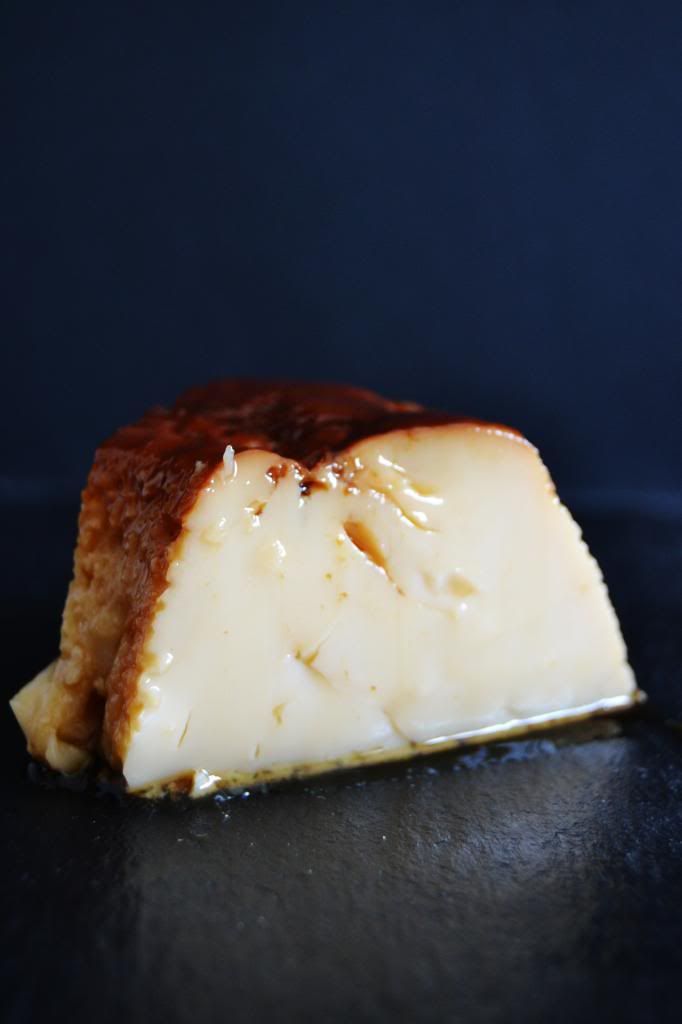
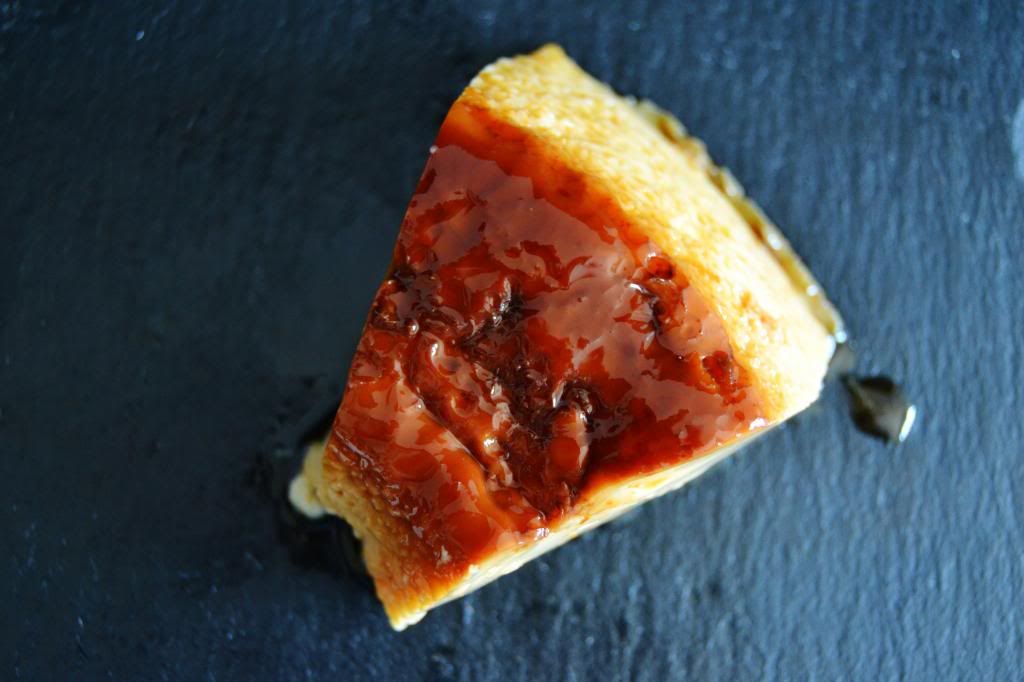
Com um inusitado sabor a café e uma cremosidade extrema, este pudim promete fazer as delícias de quem o prova!
With an unusual coffee flavor and creaminess extreme, this pudding promises to make the delights of those who try it!
1 liter whole milk, 100ml strong espresso, 6 eggs, 300g white sugar, caramel
Preparação:
Ferver o leite com o café e o açúcar. Juntar os ovos batidos e deixar engrossar.
Deitar numa forma caramelizada e levar ao forno, em banho-maria, a 180ºC por 90 minutos.
Deixar arrefecer e desenformar a frio.
Method:
Boil the milk with the coffee and sugar. Add the beaten eggs and allow to thicken.
Pour in a caramelized mold and bake in a water bath at 180ºC for 90 minutes.
Allow to cool and unmold cold.
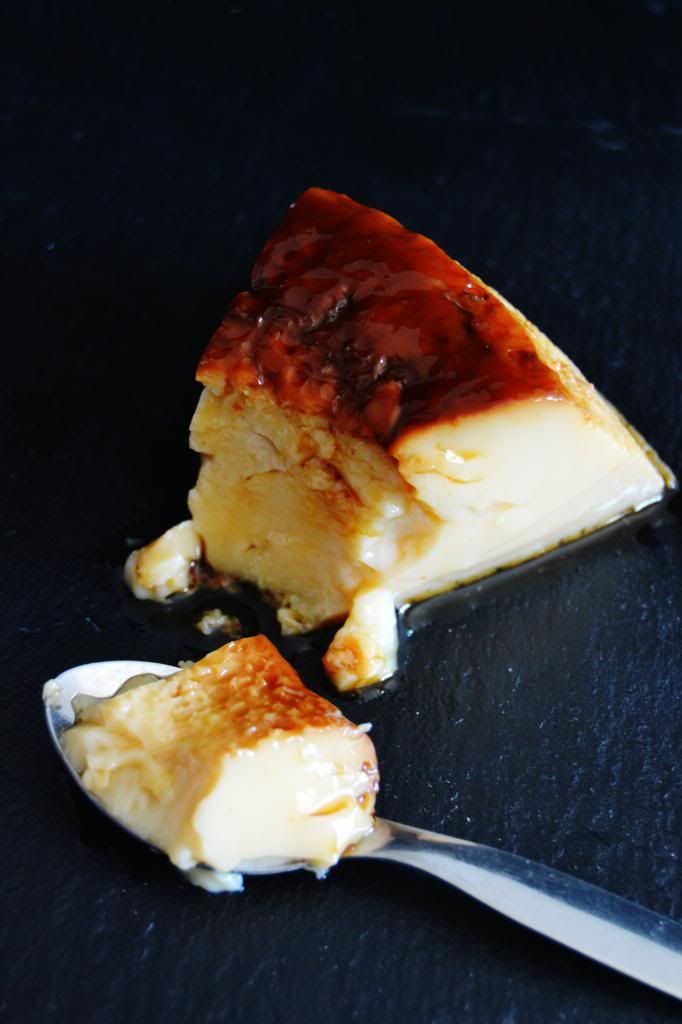
With an unusual coffee flavor and creaminess extreme, this pudding promises to make the delights of those who try it!
Ingredientes:
- 1 litro de leite gordo
- 100ml de café expresso forte
- 6 ovos
- 300g de açúcar
- caramelo
1 liter whole milk, 100ml strong espresso, 6 eggs, 300g white sugar, caramel
Preparação:
Ferver o leite com o café e o açúcar. Juntar os ovos batidos e deixar engrossar.
Deitar numa forma caramelizada e levar ao forno, em banho-maria, a 180ºC por 90 minutos.
Deixar arrefecer e desenformar a frio.
Method:
Boil the milk with the coffee and sugar. Add the beaten eggs and allow to thicken.
Pour in a caramelized mold and bake in a water bath at 180ºC for 90 minutes.
Allow to cool and unmold cold.
Bolos - Individuais
Barras de Cereais com Chocolate || Chocolate Cereal Bars
segunda-feira, fevereiro 25, 2013
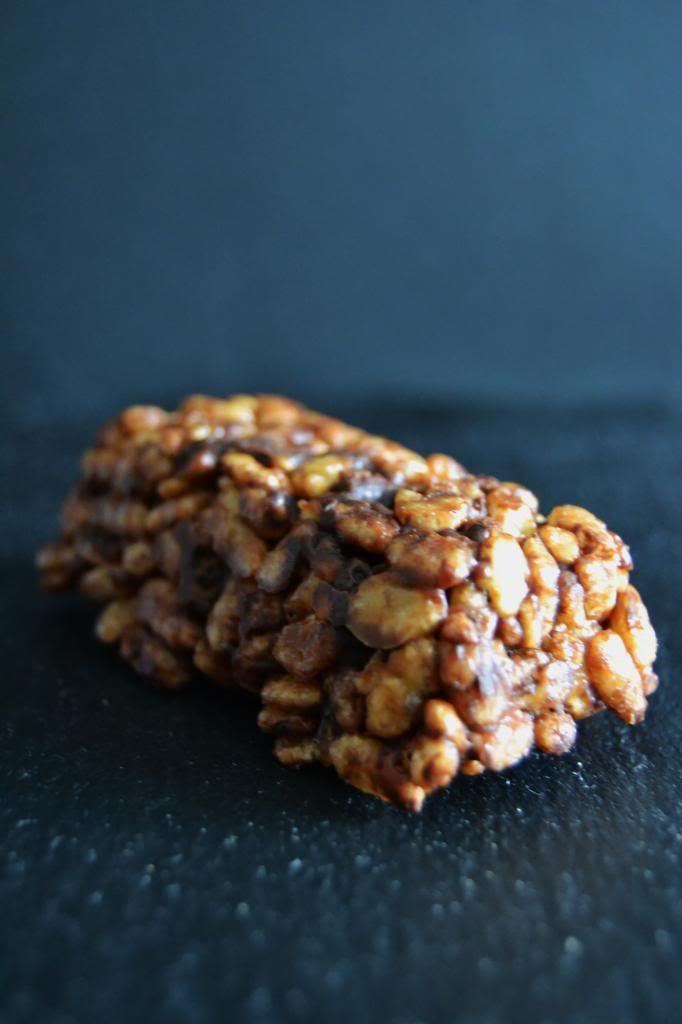
Inspiradas nestas deliciosas barras da Gisela, do blog Pão e Beldroegas, as barras de chocolate saíram quase instantaneamente.
Inspired by these delicious bars of Gisela, of the blog Pão e Beldroegas, chocolate bars came almost instantly.
Ingredientes:
- 125ml de glucose líquida (ou mel)
- 3 colheres (sopa) de manteiga de amendoim
- 80g de pepitas de chocolate
- 150g de arroz tufado
Ingredients:
125ml glucose (or honey), 3 tablespoons peanut butter, 80g chocolate chips, 150g puffed rice

Preparação:
Levar ao lume a glucose e a manteiga de amendoim até dissolver.
Juntar o arroz tufado e as pepitas de chocolate e misturar bem.
Colocar a mistura em formas untadas, ou num tabuleiro untado.
Deixar solidificar e desenformar ou partir em barras.
Method:
Bring to boil glucose and peanut butter until dissolved.
Add the puffed rice and chocolate chips and mix well.
Place the mixture in forms greased or in an oiled tray.
Allow to set and unmold or slice bars.
Add the puffed rice and chocolate chips and mix well.
Place the mixture in forms greased or in an oiled tray.
Allow to set and unmold or slice bars.

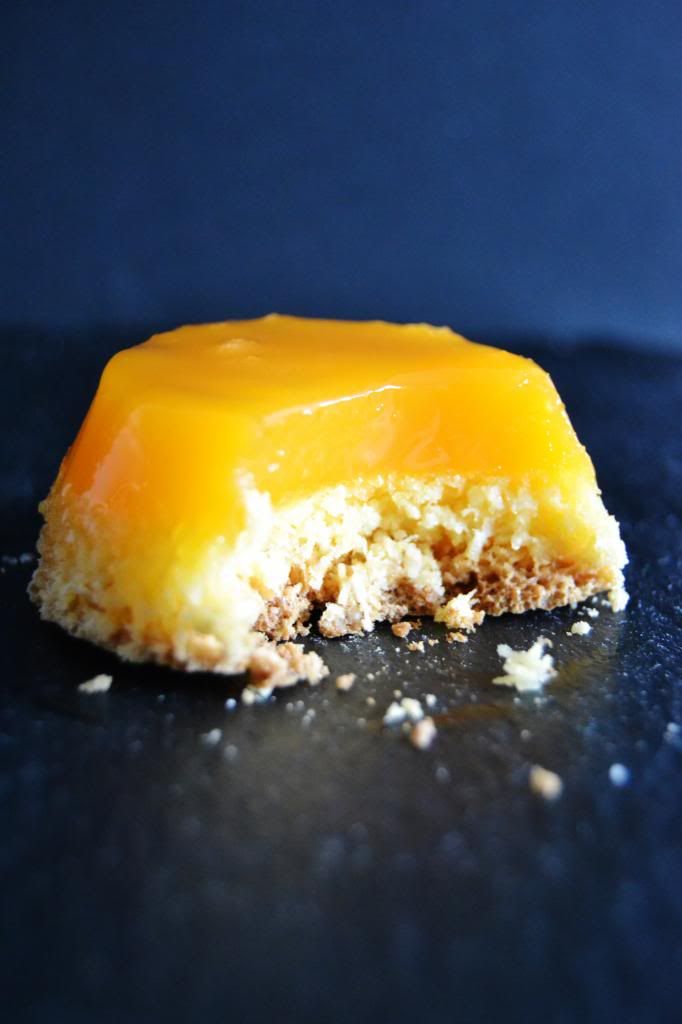
Amarelos... Captando toda a nossa atenção...
Yellow... Capturing all our attention ...
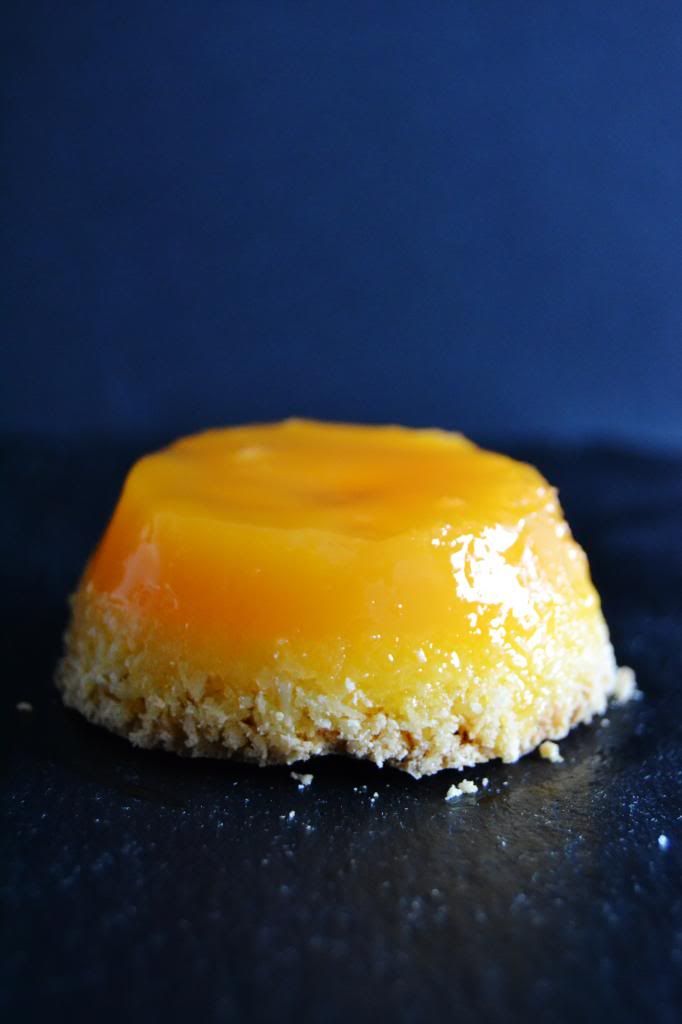
Ingredientes:
- 10 gemas
- 2 ovos
- 14 colheres (sopa) de açúcar
- 100g de côco ralado
- 1 colher (sopa) de manteiga derretida, à temperatura ambiente
- manteiga, para untar
10 egg yolks, 2 eggs, 14 tablespoons white sugar, 100g dried coconut, 1 tablespoon melted butter (at room temperature), butter to grease
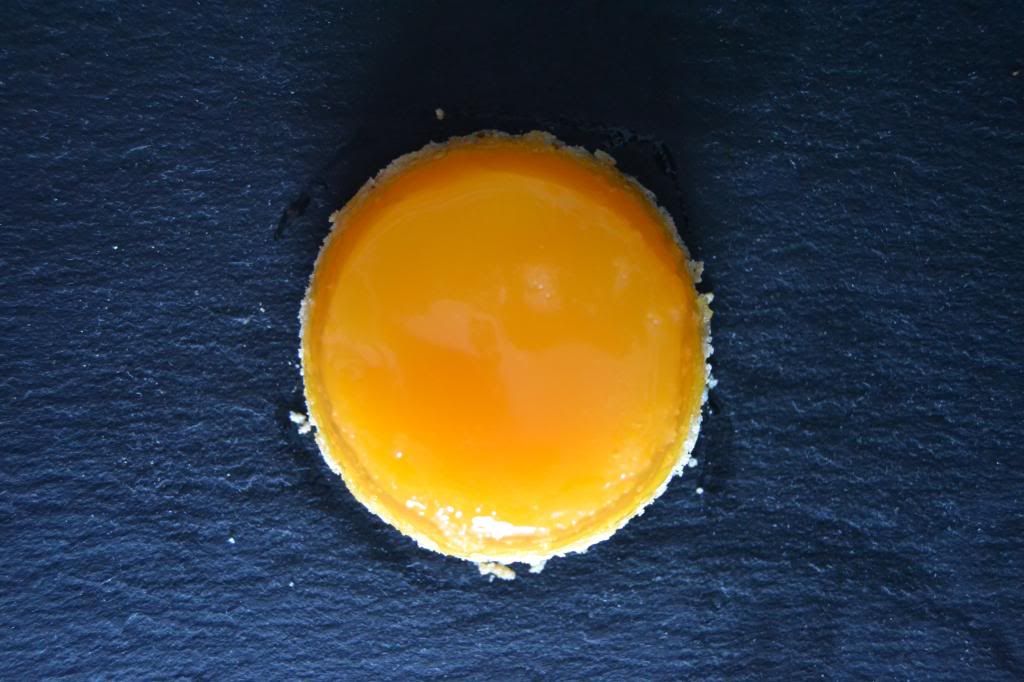
Preparação:
Junte o açúcar ao coco ralado.
Junte a manteiga, as gemas e os ovos. Junte o açúcar o coco ralado e envolva.
Unte as formas com manteiga e polvilhe com açúcar.
Coloque o preparado nas formas e leve ao forno, em banho-maria, a 180ºC por 50 minutos.
Retire, deixe arrefecer e desenforme.
Method:
Add the sugar to the dried coconut.
Add the butter, egg yolks and eggs. Add sugar and coconut and mix.
Grease molds with butter and sprinkle with sugar.
Place it in molds and bake in a water bath at 180ºC for 50 minutes.
Remove, let cool and unmold.
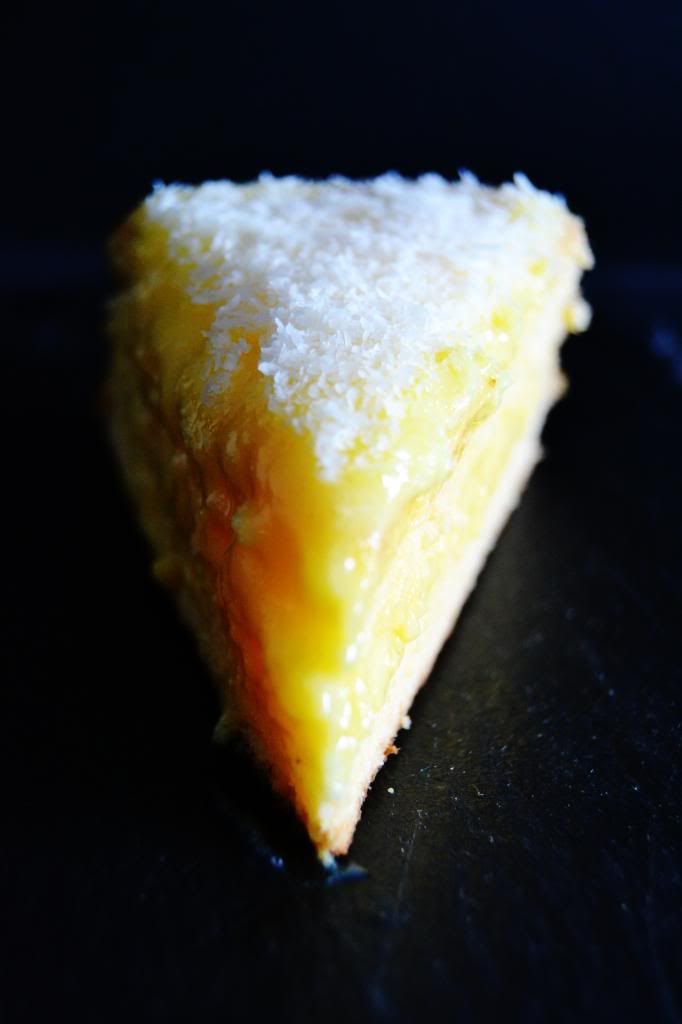
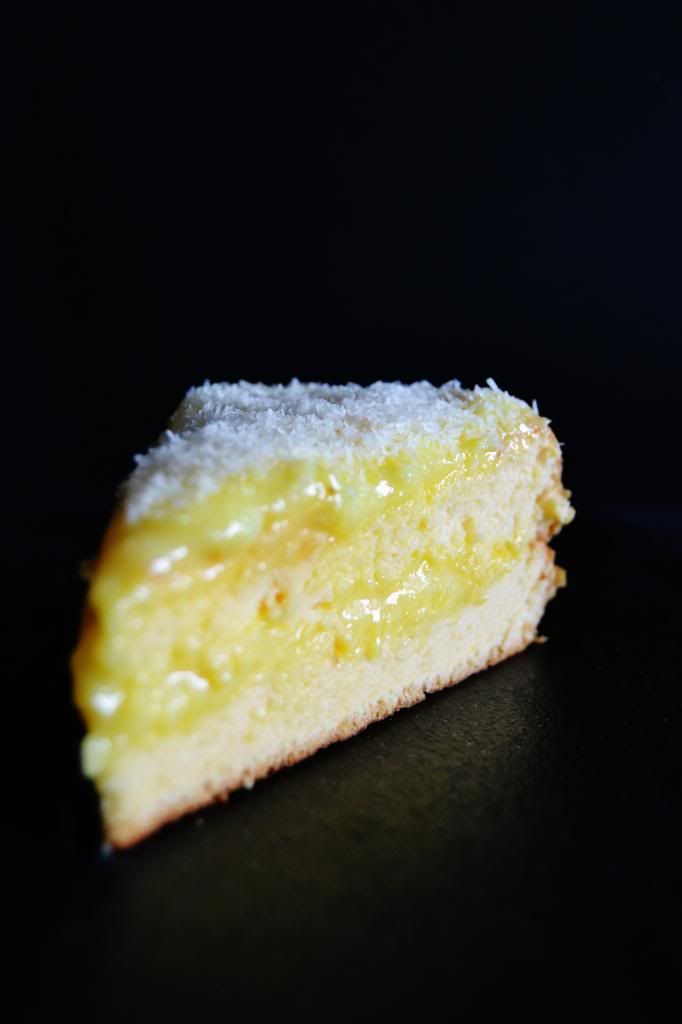
Um bolo rico, com um creme saboroso, uma humidade deliciosa e textura suave...
Único, com o seu sabor baunilhado, acompanha lindamente uma chávena de chá fumegante!
A rich cake with a tasty cream, a delicious moisture and smooth texture ...
Single, with its vanilla flavor, beautifully accompanies a cup of steaming tea!
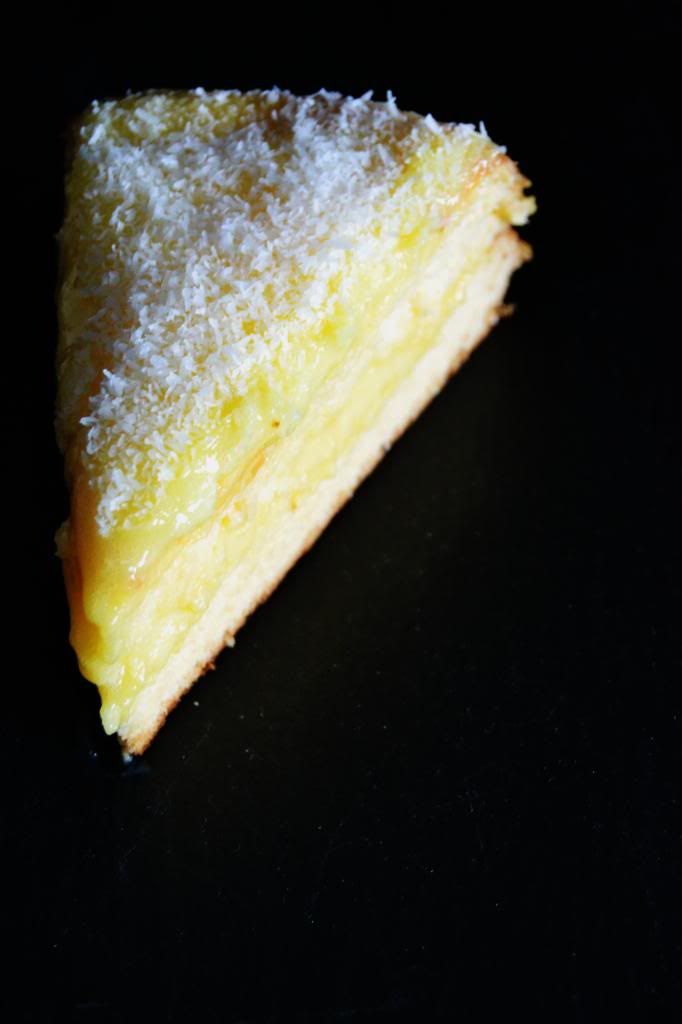
Ingredientes:
(bolo)
(cake)150g white sugar, 100g potato starch, 6 eggs, 1 tablespoon all-purpose flour, 1 teaspoon baking powder, juice 1/2 lemon
(filling) 500ml milk, 50g white sugar, 2 tablespoons custard powder, dried coconut to sprinkle
Preparação:
Pré-aqueça o forno a 180ºC.
Num recipiente, bata as gemas com o açúcar até obter uma mistura fofa e clara. Junte a fécula, a farinha, o fermento e o sumo do limão.
À parte bata as claras e envolva no preparado anterior com cuidado.
Verta na forma untada e leve ao forno por 20 minutos.
Entretanto prepare o creme, juntando o açúcar à custarda. Adicione lentamente o leite frio e envolva bem. Leve ao lume mexendo sempre até ferver. Retire do lume e deixe arrefecer.
Recheie e cubra o bolo com este creme. Polvilhe com côco ralado.
Method:
Preheat the oven to 180ºC.
In a bowl, beat the egg yolks with the sugar until the mixture is fluffy and light. Add the starch, flour, baking powder and lemon juice. Aside, beat the egg whites and involves it carefully in the earlier mixture.
Pour in a greased pan and bake for 20 minutes.
Meanwhile prepare the filling, adding the sugar to the custard. Slowly add the cold milk and wrap well. Bring to boil stirring constantly until boiling. Remove from heat and let cool.
Fill and cover the cake with this mixture. Sprinkle with dried coconut.
Único, com o seu sabor baunilhado, acompanha lindamente uma chávena de chá fumegante!
A rich cake with a tasty cream, a delicious moisture and smooth texture ...
Single, with its vanilla flavor, beautifully accompanies a cup of steaming tea!
Ingredientes:
(bolo)
- 150g de açúcar
- 100g de fécula de batata
- 6 ovos
- 1 colher (sopa) de farinha
- 1 colher (chá) de fermento em pó
- sumo de 1/2 limão
- 500ml de leite
- 50g de açúcar
- 2 colheres (sopa) de farinha de custarda
- côco ralado para polvilhar
(cake)150g white sugar, 100g potato starch, 6 eggs, 1 tablespoon all-purpose flour, 1 teaspoon baking powder, juice 1/2 lemon
(filling) 500ml milk, 50g white sugar, 2 tablespoons custard powder, dried coconut to sprinkle
Preparação:
Pré-aqueça o forno a 180ºC.
Num recipiente, bata as gemas com o açúcar até obter uma mistura fofa e clara. Junte a fécula, a farinha, o fermento e o sumo do limão.
À parte bata as claras e envolva no preparado anterior com cuidado.
Verta na forma untada e leve ao forno por 20 minutos.
Entretanto prepare o creme, juntando o açúcar à custarda. Adicione lentamente o leite frio e envolva bem. Leve ao lume mexendo sempre até ferver. Retire do lume e deixe arrefecer.
Recheie e cubra o bolo com este creme. Polvilhe com côco ralado.
Method:
Preheat the oven to 180ºC.
In a bowl, beat the egg yolks with the sugar until the mixture is fluffy and light. Add the starch, flour, baking powder and lemon juice. Aside, beat the egg whites and involves it carefully in the earlier mixture.
Pour in a greased pan and bake for 20 minutes.
Meanwhile prepare the filling, adding the sugar to the custard. Slowly add the cold milk and wrap well. Bring to boil stirring constantly until boiling. Remove from heat and let cool.
Fill and cover the cake with this mixture. Sprinkle with dried coconut.
Sobremesas - Doces de Colher
Mousse de Chocolate Intensa || Intense Chocolate Mousse
domingo, fevereiro 17, 2013
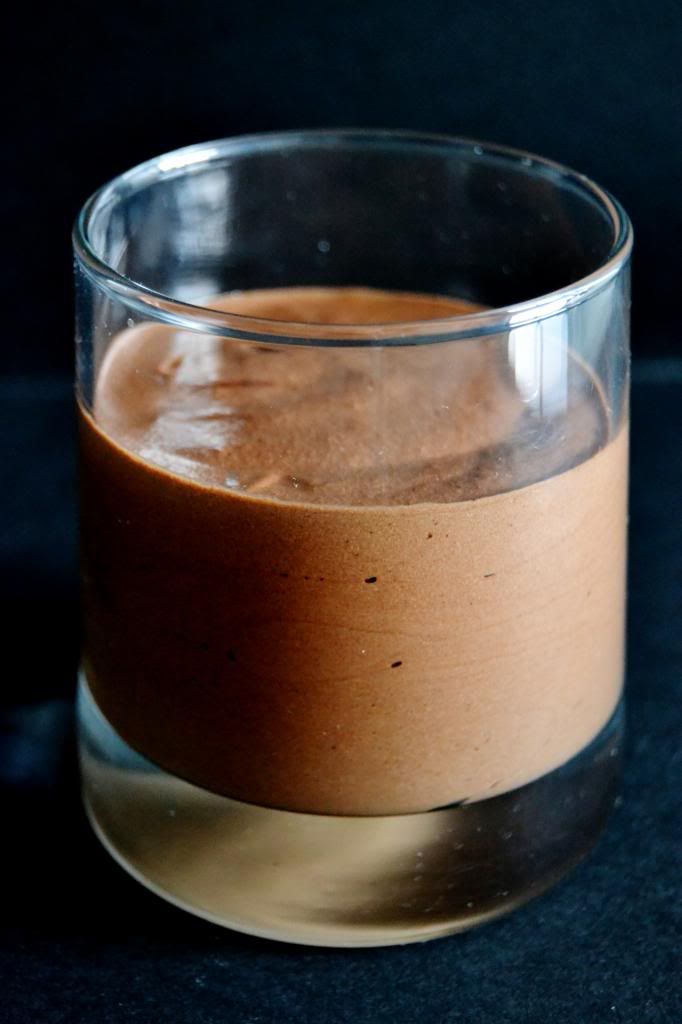
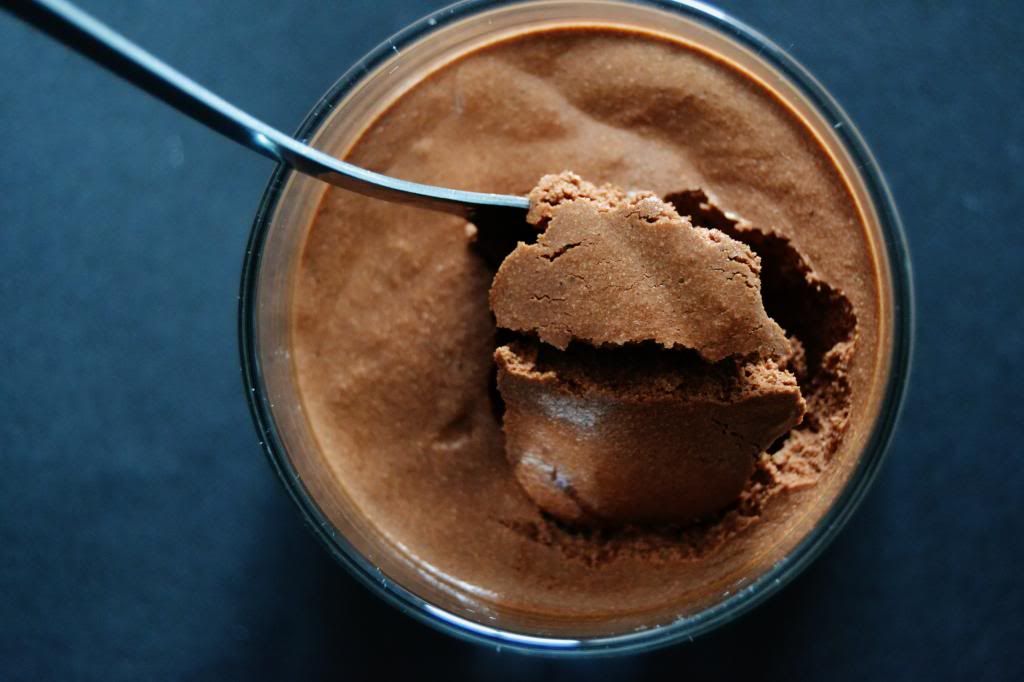
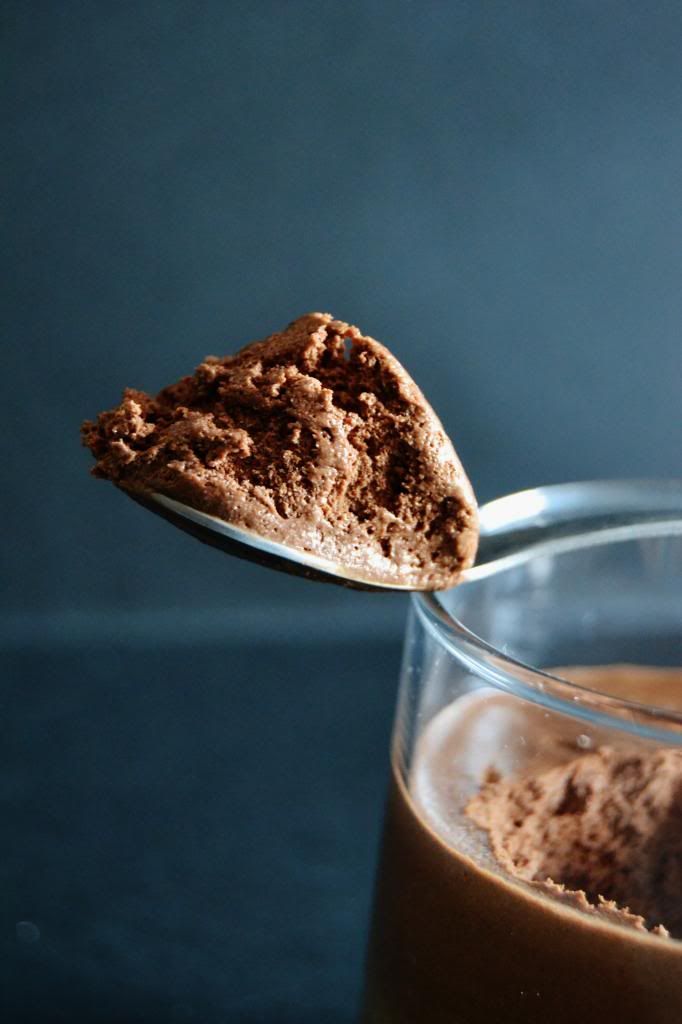
Para os verdadeiros chocaholics, esta mousse mostra a verdadeira intensidade de um chocolate rico em cacau.
Espessa, pouco açucarada, para os verdadeiros apaixonados por chocolate!
For the real chocaholics, this mousse shows the truly intensity of a chocolate reach in cocoa.
Thick, slightly sweetened, for the real chocolate lovers!
 Ingredientes:
200g 70% cocoa chocolate, 6 eggs, 3 tablespoons sugar
Preparação:
Derreta o chocolate em banho-maria.
Separe as gemas das claras. Bata as gemas com o açúcar até obter um creme esbranquiçado, com o dobro do volume (no mínimo por 5 minutos). Envolva o chocolate derretido nas gemas.
Bata as claras em castelo e envolva-as delicadamente no preparado anterior.
Coloque a mousse em pequenas taças e refrigere. Sirva bem frio.
Method:
Melt chocolate in double boiler.
Separate the egg yolks from the whites. Beat the egg yolks with the sugar until it get whitish, with twice the volume (at least for 5 minutes). Wrap the melted chocolate into the egg yolks.
Beat the egg whites and wrap them gently in the mixture.
Place the mousse into small bowls and refrigerate. Serve it very cold.
Espessa, pouco açucarada, para os verdadeiros apaixonados por chocolate!
For the real chocaholics, this mousse shows the truly intensity of a chocolate reach in cocoa.
Thick, slightly sweetened, for the real chocolate lovers!
- 200g de chocolate 70% cacau
- 6 ovos
- 3 colheres (sopa) de açúcar
200g 70% cocoa chocolate, 6 eggs, 3 tablespoons sugar
Preparação:
Derreta o chocolate em banho-maria.
Separe as gemas das claras. Bata as gemas com o açúcar até obter um creme esbranquiçado, com o dobro do volume (no mínimo por 5 minutos). Envolva o chocolate derretido nas gemas.
Bata as claras em castelo e envolva-as delicadamente no preparado anterior.
Coloque a mousse em pequenas taças e refrigere. Sirva bem frio.
Method:
Melt chocolate in double boiler.
Separate the egg yolks from the whites. Beat the egg yolks with the sugar until it get whitish, with twice the volume (at least for 5 minutes). Wrap the melted chocolate into the egg yolks.
Beat the egg whites and wrap them gently in the mixture.
Place the mousse into small bowls and refrigerate. Serve it very cold.
Bolos - Bolos de Fatia
Tarte de Limão Merengada || Lemon Meringue Pie
quarta-feira, fevereiro 06, 2013
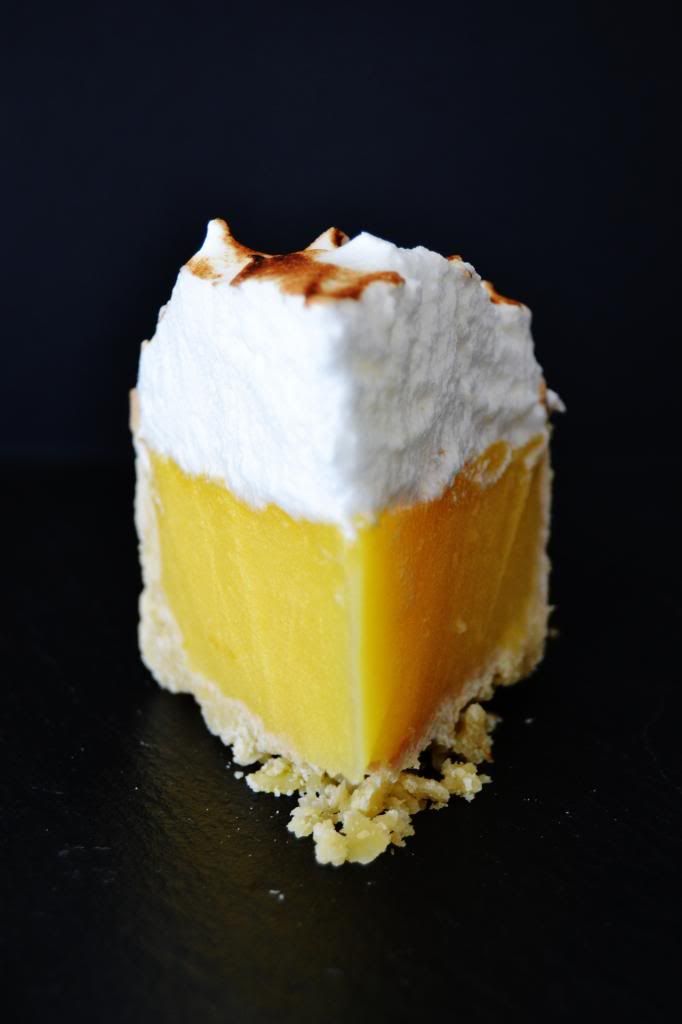
A dualidade perfeita entre o ácido e o doce, o equilíbrio entre texturas - crocante, cremoso e esponjoso -, fazem desta tarte uma verdadeira perdição.
The perfect duality between sweet and sour, the balance between textures - crunchy, creamy and spongy -, make this pie a true perdition.

(massa)
Ingredients:
(pastry) 250g all-purpose flour, 80ml water, 60g white sugar, 125g salted butter;
(filling) zest of 2 lemons, 150ml lemon juice freshly squeezed, 400ml water, 4 egg yolks, 150g yellow corn flour, 260g white sugar, 80g salted butter;
(meringue) 4 egg whites, 150g white sugar, 50ml water, 5ml vanilla essence
 Preparação:
Comece pela massa. Leve ao lume a água, a manteiga e o açúcar até ferver. Junte a farinha, envolva bem e deixe cozer até se despegar do fundo do tacho. Remova do lume e deixe arrefecer.
Estenda a massa com os dedos numa forma de aro removível, estendendo-a às laterais. Pique a masssa com um garfo.
Leve ao forno pré-aquecido a 180ºC por 10 a 15 minutos, ou até aloirar. Retire do forno e deixe arrefecer.
Para o recheio leve ao lume todos os ingredientes com excepção da farinha de milho e das gemas.
Deixe ferver. Junte a farinha de milho às gemas e envolva o máximo que conseguir. Junte a calda fervente lentamente e envolva com cuidado para não grumar. Leve o preparado ao lume para cozer e engrossar, até obter uma consistência meio espessa. Coloque o recheio sobre a massa e leve ao frigorífico para arrefecer e prender.
Por fim prepare o merengue. Leve o açúcar ao lume com a água até obter uma calda. Bata as claras em castelo e junte a calda a fio, batendo sempre, até obter um merengue brilhante. Junte o extracto de baunilha e bata até arrefecerem.
Coloque o merengue sobre a tarte, formando pequenos picos com a colher.
Queime o merengue com um maçarico de cozinha.
Sirva fresca.
Method:
Start with pastry. Boil water with butter and sugar. Add flour and mix it well. Let it cook until it comes off of the bottom of the pan. Stop cooking it and let it cool.
With your fingers, stretch the pastry in a round mold. Be sure it covers all the sides of the mould until the top. Prick the pastry with a fork.
Bake it in a pre-heaten oven, at 180ºC, for about 10-15 minutes, or until it gets gold. Take it off of the oven and let it cool.
For the filling, boil all the ingredients, excepting the yellow corn flour and the egg yolks. Mix this two ingredients the best you can and add the boiling syrup, slowly, mixing well, to avoid lumps. Take the filling to boil and to thicken, until you get a middle thick consistency. Put the filling in the baked pastry and let it cool.
Finally, do the meringue. Boil the sugar and the water until you get a syrup. Beat the egg whites and add the syrup, slowly, while you keep beating it, until you get a shinny meringue. Add the vanilla essence and keep beating it until it cools.
Put the meringue above the filling, making little peaks with the spoon.
Burn the meringue gently with a cooking torch.
Serve it cold.
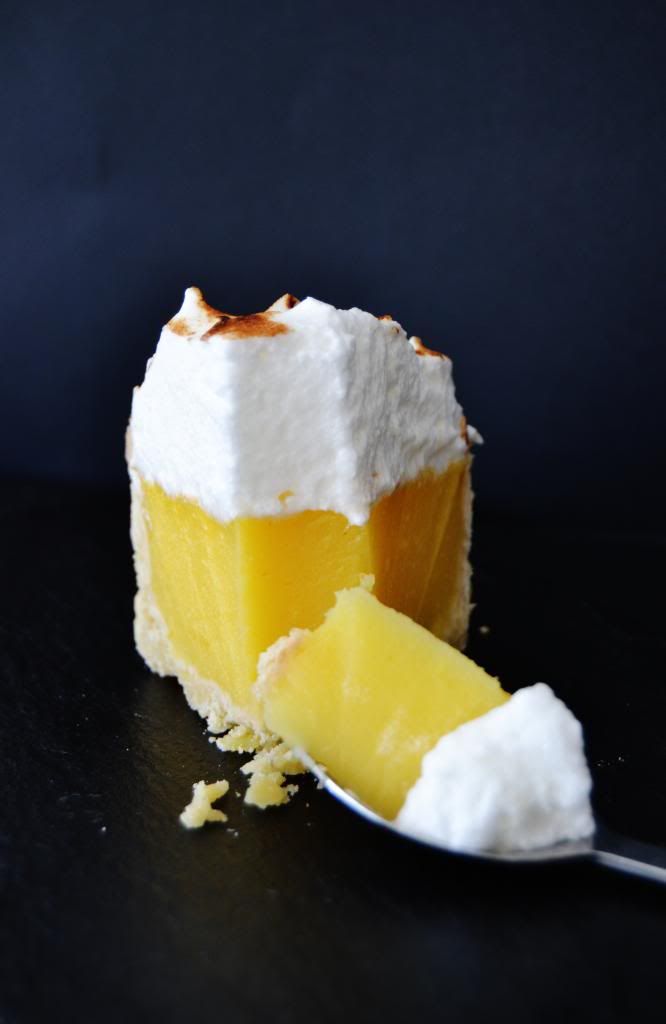
The perfect duality between sweet and sour, the balance between textures - crunchy, creamy and spongy -, make this pie a true perdition.
Out of lemon flowers
loosed
on the moonlight,
love's
lashed and insatiable
essences, sodden with fragrance,
t
he lemon tree's yellow emerges,
the lemons move down from the tree's planetarium
Delicate merchandise!
he lemon tree's yellow emerges,
the lemons move down from the tree's planetarium
Delicate merchandise!
The harbors are big with it-
bazaars
for the light and the
barbarous gold.
We open the halves of a miracle,
and a clotting of acids brims into the starry divisions:
creation's original juices, irreducible, changeless, alive:
so the freshness lives on in a lemon, in the sweet-smelling house of the rind,
the proportions, arcane and acerb.
Cutting the lemon the knife leaves a little cathedral:
alcoves unguessed by the eye that open acidulous glass
to the light; topazes riding the droplets, altars, aromatic facades.
So, while the hand holds the cut of the lemon,
half a world on a trencher,
We open the halves of a miracle,
and a clotting of acids brims into the starry divisions:
creation's original juices, irreducible, changeless, alive:
so the freshness lives on in a lemon, in the sweet-smelling house of the rind,
the proportions, arcane and acerb.
Cutting the lemon the knife leaves a little cathedral:
alcoves unguessed by the eye that open acidulous glass
to the light; topazes riding the droplets, altars, aromatic facades.
So, while the hand holds the cut of the lemon,
half a world on a trencher,
the gold of the universe
wells
to your touch:
a cup yellow with miracles, a breast and a nipple perfuming the earth;
a flashing made fruitage, the diminutive fire of a planet.
a cup yellow with miracles, a breast and a nipple perfuming the earth;
a flashing made fruitage, the diminutive fire of a planet.
(Pablo Neruda)
Muito mais inspirados, aqui vamos nós...
So much more inspired, here we go...
So much more inspired, here we go...
Ingredientes:
- 250g de farinha
- 80ml de água
- 60gr de açúcar
- 125g de manteiga
- raspa da casca de 2 limões
- 150ml de sumo de limão
- 400ml de água
- 4 gemas
- 150g de farinha de milho amarela
- 260g de açúcar
- 80g de manteiga
- 4 claras
- 150g de açúcar
- 50ml de água
- 5ml de extracto de baunilha
Ingredients:
(pastry) 250g all-purpose flour, 80ml water, 60g white sugar, 125g salted butter;
(filling) zest of 2 lemons, 150ml lemon juice freshly squeezed, 400ml water, 4 egg yolks, 150g yellow corn flour, 260g white sugar, 80g salted butter;
(meringue) 4 egg whites, 150g white sugar, 50ml water, 5ml vanilla essence
Comece pela massa. Leve ao lume a água, a manteiga e o açúcar até ferver. Junte a farinha, envolva bem e deixe cozer até se despegar do fundo do tacho. Remova do lume e deixe arrefecer.
Estenda a massa com os dedos numa forma de aro removível, estendendo-a às laterais. Pique a masssa com um garfo.
Leve ao forno pré-aquecido a 180ºC por 10 a 15 minutos, ou até aloirar. Retire do forno e deixe arrefecer.
Para o recheio leve ao lume todos os ingredientes com excepção da farinha de milho e das gemas.
Deixe ferver. Junte a farinha de milho às gemas e envolva o máximo que conseguir. Junte a calda fervente lentamente e envolva com cuidado para não grumar. Leve o preparado ao lume para cozer e engrossar, até obter uma consistência meio espessa. Coloque o recheio sobre a massa e leve ao frigorífico para arrefecer e prender.
Por fim prepare o merengue. Leve o açúcar ao lume com a água até obter uma calda. Bata as claras em castelo e junte a calda a fio, batendo sempre, até obter um merengue brilhante. Junte o extracto de baunilha e bata até arrefecerem.
Coloque o merengue sobre a tarte, formando pequenos picos com a colher.
Queime o merengue com um maçarico de cozinha.
Sirva fresca.
Method:
Start with pastry. Boil water with butter and sugar. Add flour and mix it well. Let it cook until it comes off of the bottom of the pan. Stop cooking it and let it cool.
With your fingers, stretch the pastry in a round mold. Be sure it covers all the sides of the mould until the top. Prick the pastry with a fork.
Bake it in a pre-heaten oven, at 180ºC, for about 10-15 minutes, or until it gets gold. Take it off of the oven and let it cool.
For the filling, boil all the ingredients, excepting the yellow corn flour and the egg yolks. Mix this two ingredients the best you can and add the boiling syrup, slowly, mixing well, to avoid lumps. Take the filling to boil and to thicken, until you get a middle thick consistency. Put the filling in the baked pastry and let it cool.
Finally, do the meringue. Boil the sugar and the water until you get a syrup. Beat the egg whites and add the syrup, slowly, while you keep beating it, until you get a shinny meringue. Add the vanilla essence and keep beating it until it cools.
Put the meringue above the filling, making little peaks with the spoon.
Burn the meringue gently with a cooking torch.
Serve it cold.
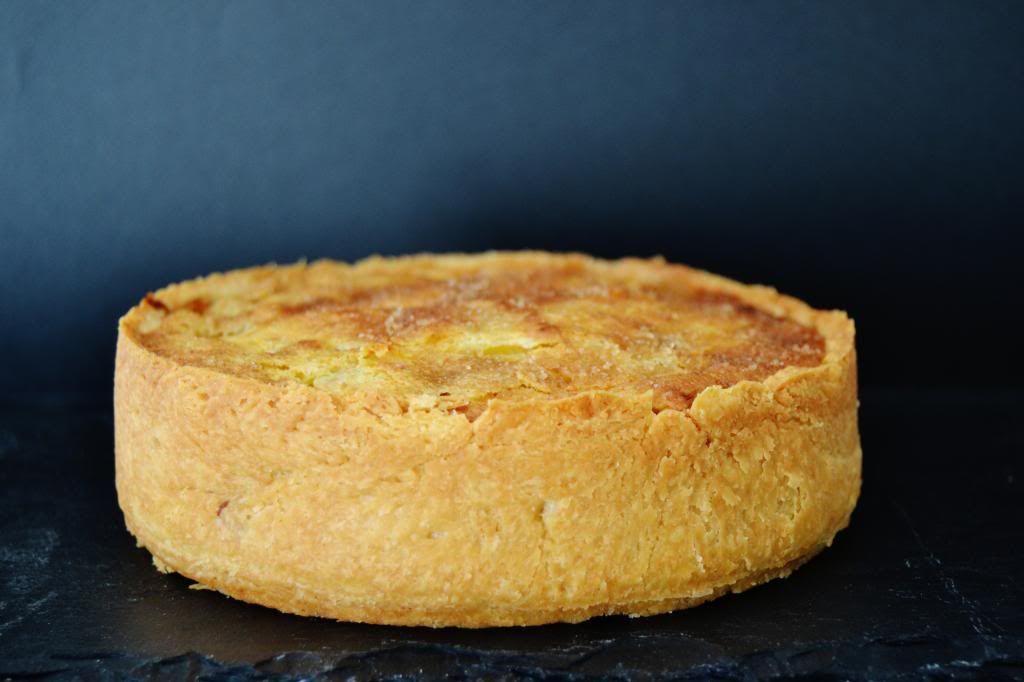
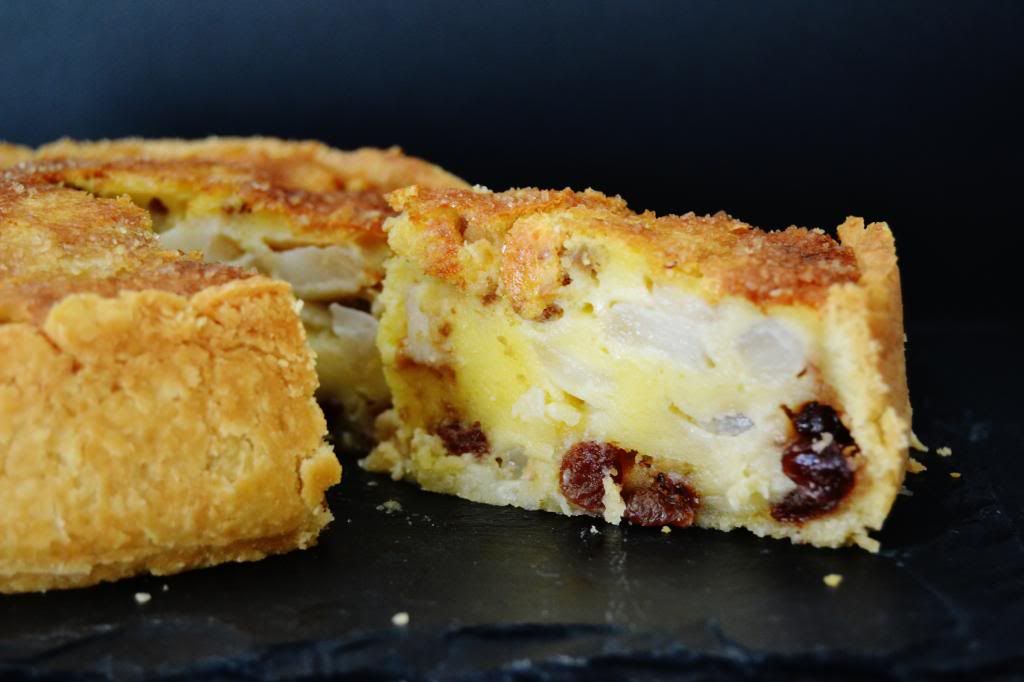
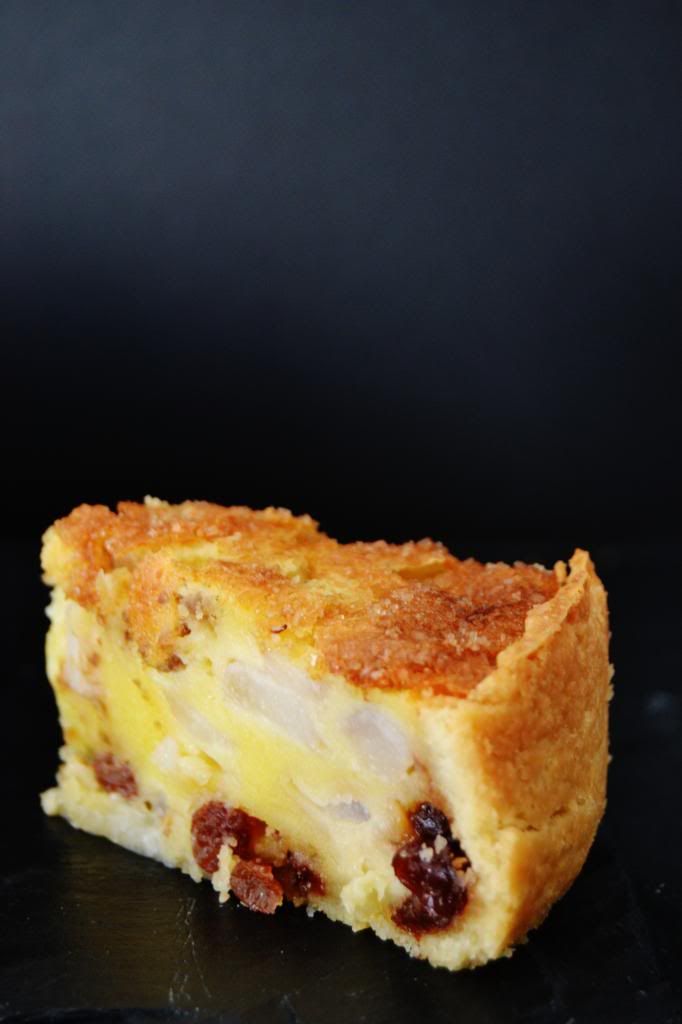
Um bolo no âmbito do projecto Dorie às Sextas, um bolo do avesso, um bolo irresistível, de aromas suaves e delicioso que contagiou todos e passou a ser um favorito... Ora vejam!
Ingredientes:
(para uma forma de 15cm)
(massa base)
Preparação:
Colocar a farinha, o açúcar e o sal num processador de alimentos com uma lâmina de metal e pulsar apenas para combinar os ingredientes. Adicionar a manteiga e a gordura. Pulsar até que os pedaços estejam misturados com a farinha. Não mexer demais - nesta altura devemos ter pedaços irregulares do tamanho de ervilhas. Pulsar de forma intermitente, acrescentando, gradualmente, 3 colheres de sopa de água gelada para a massa. Continuar a adicionar a água, um pouco de cada vez, pulsando, até que a massa fique uniforme (é possível que se notem alguns pedaços maiores de manteiga).
Deitar a massa sobre uma superfície enfarinhada, ou entre dois discos de papel vegetal, para formar uma base do tamanho indicado. Enrolar o disco em película aderente e levar ao frigorífico por 20 minutos.
Retirar a parte superior de papel ou filme e deitar sobre a forma para forrar. Remover o resto do papel ou película e, em seguida, premir suavemente a massa de pão dentro da tarteira, para ficar sem bolsas de ar. Em seguida, pressionar os lados da massa para cima, contra os lados da forma. Levar ao frigorífico.
Misturar a farinha, o fermento e o sal numa tigela pequena. Reservar.
Descascar as pêras e retirar o caroço; em seguida, cortar em cubos. Colocar numa tigela média e misturar com o sumo de limão para evitar que oxidem. Misturar as raspas, as passas e as nozes.
Na batedeira, bater os ovos e o açúcar em velocidade média-alta até engrossar (cerca de 3 minutos). Reduzir a velocidade e adicionar o rum e os extratos. Em seguida, adicionar os ingredientes secos, misturando apenas até incorporar. Por último, adicionar a manteiga derretida, as natas, misturando apenas até que a massa fique homogénea.
Retirar a forma forrada do frigorífico. Distribuir os frutos pelo fundo e, em seguida, verter a massa até cobrir 3/4 da forma, uma vez que a mesma vai crescer. Polvilhar com o açúcar mascavado para criar uma crosta crocante.
Levar ao forno pré-aquecido 180º por 50 minutos, ou até dourar a crosta e uma faca inserida no creme saia limpa.
Retirar do forno e deixar arrefecer completamente na forma sobre uma grade, antes de desenformar.
Ingredientes:
(para uma forma de 15cm)
(massa base)
- 3/4 chávena de farinha
- 1 colher (sopa) de açúcar
- 1/4 colher (chá) de sal
- 75g de manteiga sem sal, fria, em cubos
- 1 e 1/4 de margarina vegetal, fria, em cubos
- 1/8 chávena de água gelada
- 1/3 chávena de farinha
- 1/4 colher (chá) de fermento em pó
- sal q.b.
- 3 pêras grandes, descascadas e em cubos
- sumo de 1 limão
- raspa de 1/2 limão
- 1/2 chávena de passas
- 1/3 de chávena de nozes em pedaços pequenos
- 2 ovos
- 1/2 chávena de açúcar
- 1 colher (sopa) de rum
- 1 colher (chá) de extracto de baunilha
- 1/2 colher (chá) de extracto de amêndoa
- 25g de manteiga derretida
- 1 chávena de natas frescas
- açúcar mascavado claro
Preparação:
Colocar a farinha, o açúcar e o sal num processador de alimentos com uma lâmina de metal e pulsar apenas para combinar os ingredientes. Adicionar a manteiga e a gordura. Pulsar até que os pedaços estejam misturados com a farinha. Não mexer demais - nesta altura devemos ter pedaços irregulares do tamanho de ervilhas. Pulsar de forma intermitente, acrescentando, gradualmente, 3 colheres de sopa de água gelada para a massa. Continuar a adicionar a água, um pouco de cada vez, pulsando, até que a massa fique uniforme (é possível que se notem alguns pedaços maiores de manteiga).
Deitar a massa sobre uma superfície enfarinhada, ou entre dois discos de papel vegetal, para formar uma base do tamanho indicado. Enrolar o disco em película aderente e levar ao frigorífico por 20 minutos.
Retirar a parte superior de papel ou filme e deitar sobre a forma para forrar. Remover o resto do papel ou película e, em seguida, premir suavemente a massa de pão dentro da tarteira, para ficar sem bolsas de ar. Em seguida, pressionar os lados da massa para cima, contra os lados da forma. Levar ao frigorífico.
Misturar a farinha, o fermento e o sal numa tigela pequena. Reservar.
Descascar as pêras e retirar o caroço; em seguida, cortar em cubos. Colocar numa tigela média e misturar com o sumo de limão para evitar que oxidem. Misturar as raspas, as passas e as nozes.
Na batedeira, bater os ovos e o açúcar em velocidade média-alta até engrossar (cerca de 3 minutos). Reduzir a velocidade e adicionar o rum e os extratos. Em seguida, adicionar os ingredientes secos, misturando apenas até incorporar. Por último, adicionar a manteiga derretida, as natas, misturando apenas até que a massa fique homogénea.
Retirar a forma forrada do frigorífico. Distribuir os frutos pelo fundo e, em seguida, verter a massa até cobrir 3/4 da forma, uma vez que a mesma vai crescer. Polvilhar com o açúcar mascavado para criar uma crosta crocante.
Levar ao forno pré-aquecido 180º por 50 minutos, ou até dourar a crosta e uma faca inserida no creme saia limpa.
Retirar do forno e deixar arrefecer completamente na forma sobre uma grade, antes de desenformar.